
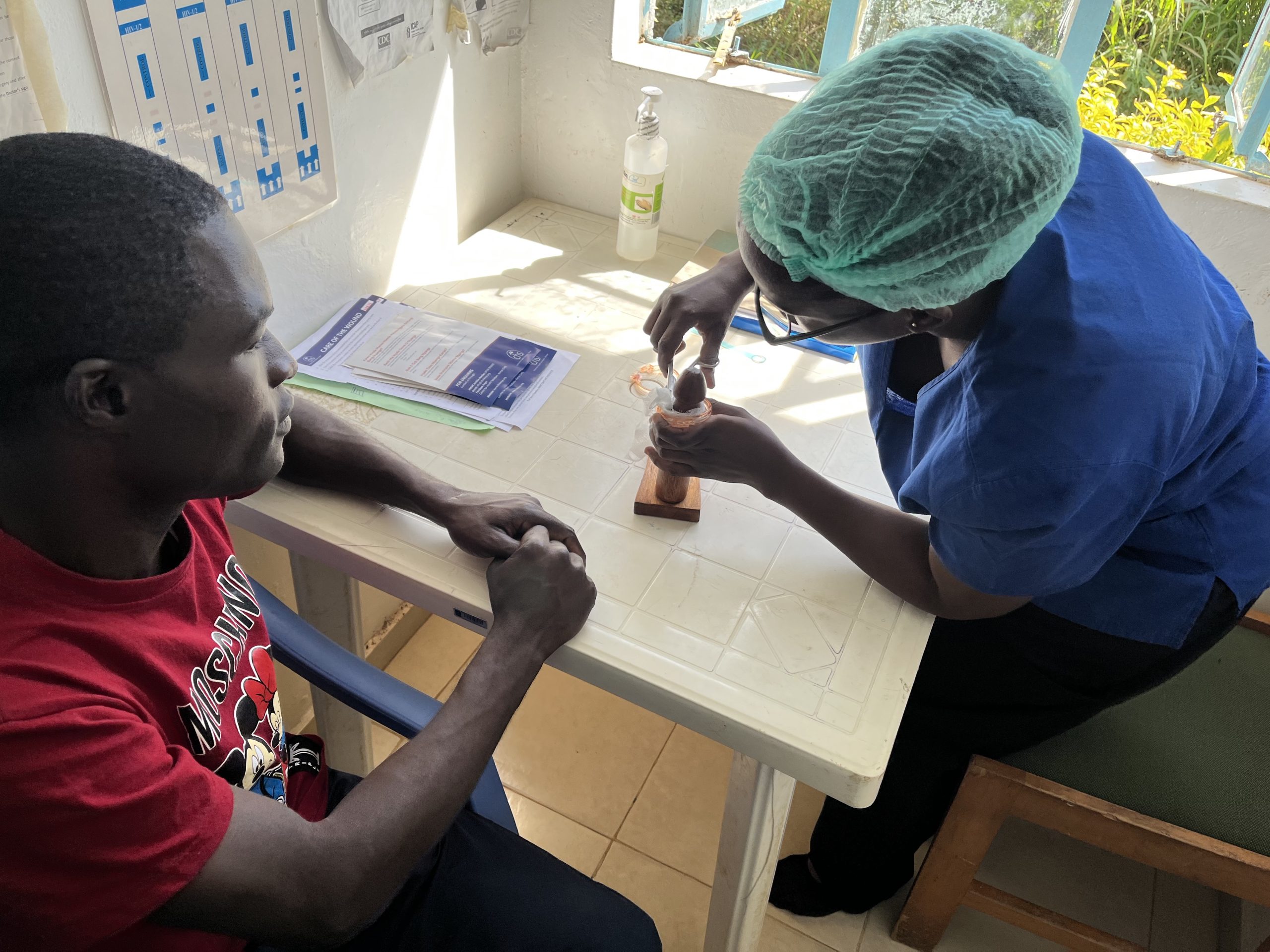
23-year-old Desmond Angira had always been afraid of getting circumcised. He had heard horror stories about the pain during the administration of anaesthesia and stitching, swelling after surgery and potential risks and complications involved during and after surgery, so he avoided the procedure for years. But as he reached his 23rd birthday, he began to feel a growing sense of unease. He knew that male medical circumcision, alongside other interventions, was one of the most effective ways of protecting himself from some sexually transmitted infections as well as HIV/AIDS, and he wanted to take control of his health.
“I heard several campaigns promoting Voluntary Male Medical Circumcision (VMMC), emphasizing the use of a Shang Ring device which is less painless, requires no stitching or injection and is seamless with a good cosmetic outcome. This instantly spiked my interest,” remembers Angira. He visited Bondo Sub County Hospital in Siaya County to learn more about the procedure. This method, he learned, was a safer and less painful option than traditional circumcision techniques. He was relieved that the men he spoke to had confirmed feeling minimal pain and discomfort during and after the procedure.
“We understand the fears and concerns that men may have about circumcision, and we take time to help them understand the benefits of VMMC services and respond to all their questions before any procedure,” said Maureene Akinyi, the Lead VMMC surgeon at Bondo Sub County Hospital.
“The Shang Ring method offers a safer and less painful option for men seeking to protect their health. By choosing the Shang Ring method, men can rest assured that they are receiving a procedure that has been proven effective, and we encourage all men to consider this option and take control of their health,” she added.

About the Shang Ring Device
The Shang Ring device is a single-use disposable device consisting of two circular rings (an inner and outer ring) used to conduct male medical circumcision. The process involves the application of anaesthetic cream to numb the areas, after which a small incision is made on the foreskin. The Shang Ring device is then placed over the penis, compressing the foreskin and causing it to detach from the penis. The excess foreskin is then removed with a scalpel, and the ring is left to help heal the wound.
VMMC clients are required to go back to the clinic after seven days for the removal of the ring. Thereafter it takes about six for healing to occur, during which clients are advised to abstain from sexual intercourse.
Currently, CHS is supporting 20 high and medium-volume government facilities in Siaya County to provide VMMC services; which are offered as part of a minimum package comprising; HIV testing services which include eligibility screening and testing, referral and linkage to appropriate services, screening and free treatment for sexually transmitted infections on site among others,” said Dennis Mboya, the CHS VMMC technical lead
To ensure sustained reach and increased demand for VMMC services, CHS Shinda Tena has engaged VMMC champions at the community level, produced Information Education and Communication (IEC) materials, shared information about the benefits of VMMC, addressed existing myths and misconceptions, involved community gatekeepers including church leaders, opinion leaders etc. and provided a package of care for all clients.
With support from the United States Emergency Plan for AIDS Relief (PEPFAR) PEPFAR through the Centers for Disease Control and Prevention (CDC), CHS has reached over 146,000 eligible men with VMMC services in Siaya County (a traditionally non-circumcising community) since October 2016.

