
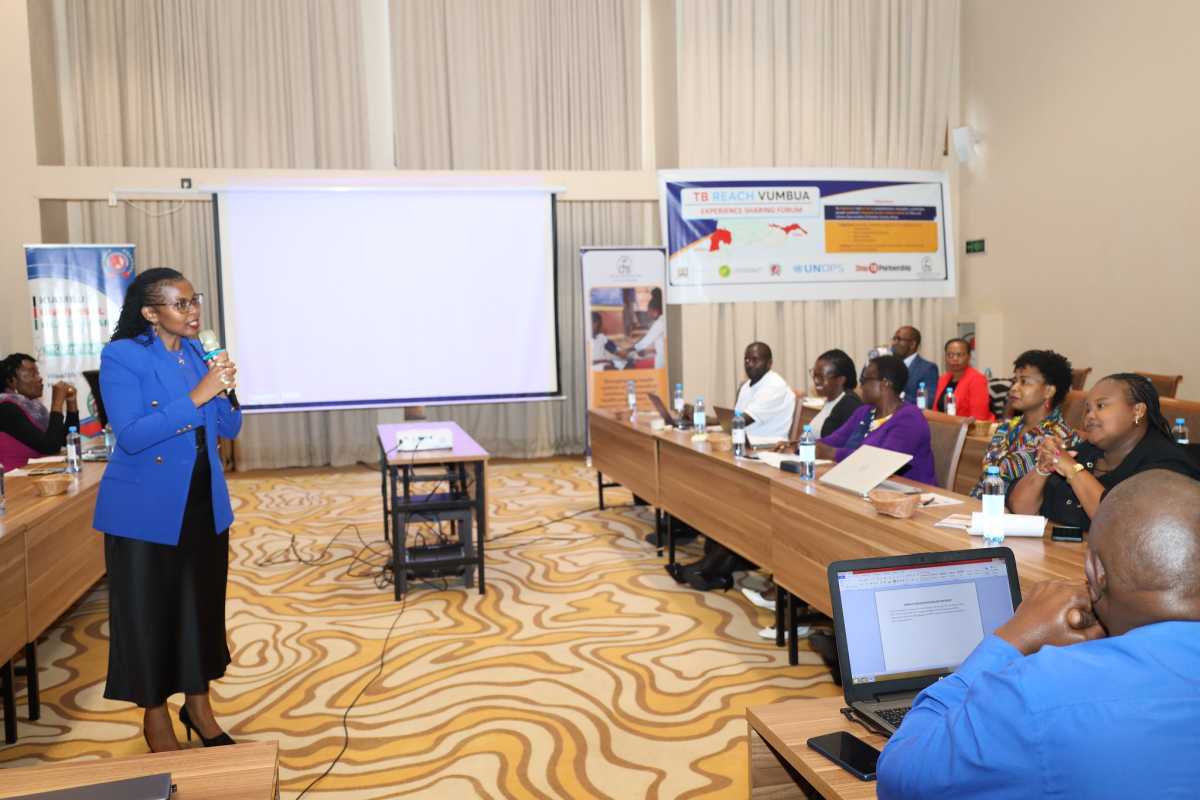
As the curtains draw on the Vumbua Project, a transformative era in respiratory and mental health care is just beginning. At a high-level experience-sharing meeting held this week, stakeholders from the Ministry of Health, County Governments, and the private sector gathered not just to celebrate the project’s closure, but to witness a “proof of concept” that is already opening doors for the next level of service delivery.
A New Blueprint for Integration
Respiratory diseases account for a staggering 25% of the outpatient burden in Kenya. For too long, diseases like TB, Asthma, COPD, and mental illnesses have been treated in silos, leading to delayed diagnoses and missed opportunities.
Dr. Nkirote (CHS) captured the project’s heartbeat: “Vumbua set out to solve the problem of the ‘missed patient.’ By prioritizing high-risk populations in urban Thika and rural Limuru, we built a people-centered model focused on one patient, one journey, and one system.”
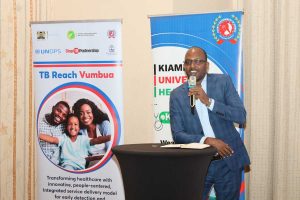 Dr. Ibrae echoed this sentiment, noting that while the project cycle is ending, the evidence is undeniable: “Vumbua is closing, but it is opening opportunities. It has shown that integration works at both the community and service delivery levels.”
The Power of Innovation and Task-Shifting
The success of Vumbua was driven by a mix of high-tech solutions and high-touch community engagement:
-
Advanced Diagnostics: From AI-enabled X-rays to Point-of-Care Ultrasound (POCUS) and Spirometry, the project brought specialized tools to the primary care level.
-
The Roving Model: Dr. Wangui, a roving specialist, vouched for the “roving physician” model as a game-changer for knowledge transfer, allowing nurses and clinicians to gain hands-on clinical skills at their local facilities.
-
Empowered Communities: Salim, a Community Health Promoter (CHP) from Tigoni, shared how training transformed his approach: “They taught us to be confident, knowledgeable, and non-judgmental.”
The Numbers Behind the Impact
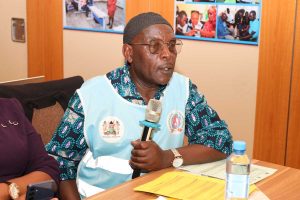 The results of the TB Reach Vumbua project, shared by Rachael from the Centre for Health Solutions – Kenya (CHS), demonstrate what is possible when silos are broken down in favor of integrated care:
- Massive Community Reach: We reached 165,237 people and provided integrated screening to 135,500 individuals, linking them to essential TB, respiratory, mental health, and nutrition services.
- 31% Surge in TB Case Detection: Annual notifications in project sites jumped from 1,248 in 2024 to 1,633 in 2025, ensuring earlier diagnosis and reduced community transmission.
- Addressing the “Whole Person”: Beyond TB, the project identified and initiated care for 1,964 mental health patients and 2,878 nutritional patients, alongside hundreds of cases of chronic lung diseases such as Asthma, COPD, and Post-TB Lung Disease (PTLD).
- Specialized Care at the Doorstep: A mobile expert team—including physicians and mental health specialists—brought high-quality care directly to 2,819 households, significantly reducing costs and travel time for families.
Strengthening the System
Beyond individual patient wins, Vumbua has bolstered System Resilience. By improving triage and real-time data use, we’ve built a scalable model that aligns perfectly with global Universal Health Coverage (UHC) goals.
Clinical Breakthroughs: TB and Beyond
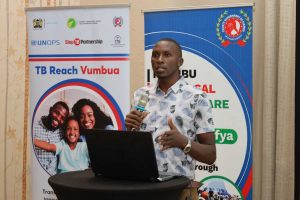 The project’s impact on Post-TB Lung Disease (PTLD) has been particularly profound. Duncan Thuo, a Clinical Officer at Tumaini Health Centre, revealed that his facility managed to document over 30 PTLD cases by recalling past TB patients for screening.
“This intervention offered a scalable, evidence-informed model for integrating TB and PTLD,” Duncan noted, expressing hope that the Social Health Authority (SHA) will incorporate PTLD to ensure long-term access for patients.
In the realm of mental health, Rachel Muthoni emphasized the necessity of task-shifting: “We must ensure mental health screening and basic management continue at the primary level. This model should be the standard package across all sub-counties.”
A Commitment to Sustainability: The Kiambu Example
For Dr. Hillary Kagwa, Kiambu County Director for Health, the Vumbua project is a success story ready for adoption.
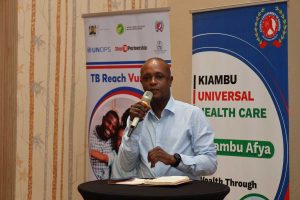
“We are here to witness a proof of concept that has come to be. Kiambu County is willing to take up the lessons learned and take them to the next level. We commit to supporting HMIS, HPT, and service delivery to ensure lasting impact.”
This commitment is bolstered by the National TB Program (NTP). Dr. Ibrae confirmed that the national policy on Lung Health has been approved, marking a critical step toward securing the funding needed to close current gaps.
The Road Ahead: From Bench to Bedside
The meeting highlighted several key pillars for the future:
-
Research Uptake: Dr. Kagima stressed the need for dockets that translate data from “bench to bedside,” ensuring research actually informs patient care.
-
Digital Superhighway: Dr. Sally from Department of state (DoS) highlighted the importance of the TIBU system and integrated sample referrals to reduce parallel systems and improve data visibility.
-
Centers of Excellence: Moving toward a hub-and-spoke model where referral facilities like Kenyatta National Hospital act as navigators for specialized lung health care.
-
Public-Private Partnership: Evan Sambagara (CIPLA) and Dr. Benter Opanga (AstraZeneca) emphasized that the private sector remains a committed partner in offering reliable treatments and mobilizing resources for scalable models.
Integration is Not Optional
As Dr. Sally aptly put it, “Integration is not optional; government ownership must accelerate.” The Vumbua project has provided the evidence, the tools, and the success stories—from patients who have become community ambassadors to healthcare workers who have mastered new technologies.
The journey of Vumbua proves that when we put the patient first, the system follows. As we transition these innovations into national systems, we move closer to a Kenya where every breath is supported by a resilient, integrated, and empathetic healthcare system.
Opening a New Chapter
As we look forward, the focus remains on scaling these successes. With the support of the Kiambu County Government and partners like the National TB Program and Stop TB Partnership, we are moving toward a future where integrated health systems are the standard, not the exception. This isn’t just about closing a project; it’s about opening a new chapter for sustainable, integrated health systems in Kenya.

