
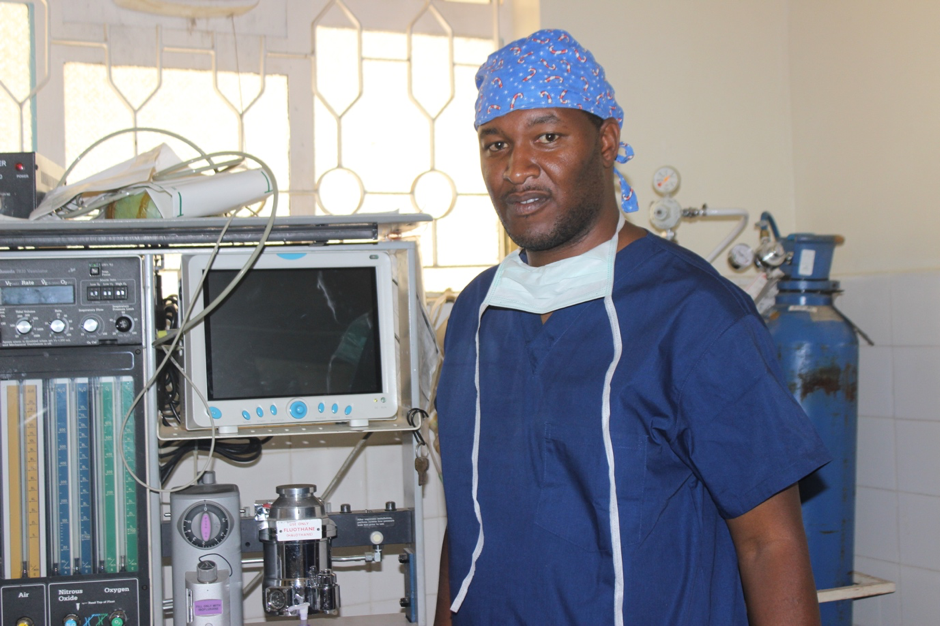
In 2002, while on a ward round at Kenyatta National Hospital, Dr David Mungai who at the time was an undergraduate student in medicine and surgery at University of Nairobi, felt dizzy and lay on an empty bed. When he regained consciousness, he was surrounded by his fellow students and the doctor who run several tests found him fit and ruled a case of fatigue due to the longstanding hours he had done that day.
“Two weeks after the incidence of blacking out, I developed a cough that worsened by the day. I went to the University Clinic and I was investigated [diagnosed] for pneumonia and treated for it,” Dr Mungai says.
Dr Mungai recalls that after taking the pneumonia treatment the cough disappeared only to emerge two weeks later but this time it was accompanied by chest pains and night sweats forcing him to go back to the clinic. The clinician, who suspected it was tuberculosis, referred him to Kenyatta National Hospital since the University Clinic didn’t have diagnostic equipment. At Kenyatta National Hospital he was diagnosed with tuberculosis.
“Being told I had TB was not an easy thing for me. It set me back, but after the doctor assured me that it was curable I set my mind on recovery mode. I told myself if others are getting cured am also going to and I began my treatment immediately,” says Dr Mungai.
Dr Mungai’s hopes of getting cured immediately were lost as his condition began to deteriorate two months after beginning treatment. The TB was becoming drug resistant.
“Despite taking the medication as advised, the TB had not gone away two months later. Another test was done and to my shock, I had a Multi-Drug Resistant TB (MDR-TB). I remember how frustrated I became and began questioning why I had not healed despite adhering to medication as advised. But again, the doctor restored my hope by assuring me that it was normal and with time, upon changing my medication, I would get well,” Dr Mungai recalls.
He began the second regimen of medication to treat the multi-drug resistant TB but unlike in the first regimen, the second had more side effects.
“Unlike in the first regimen where there were the common sides effects of drugs such as change of urine colour, gastrointestinal effects and irritations, the second regimen kicked me really hard. I had severe headaches, convulsions and psychiatric manifestations. I remember I used to have confused speech. We would be talking and my friends and brothers would tell me I have diverted from the topic to making my own stories. I remember once at my brother’s place, I tried lighting up the gas cooker when I had my first attack and collapsed. The good thing is that the kitchen was near the window and the neighbours saw what happened and rushed me to the hospital,” Dr Mungai shares. The daily injection also left him with swellings all over his body in the form of cellulite.
Despite all this, Dr Mungai didn’t defer his studies and soldiered on while still on medication.
“This whole experience was very traumatizing but I had the resolve to come out victorious. I would be in class and just convulse. I remember when we closed school and went home, my mother who was not aware of what was ailing me asked me if it is the studies that had taken a toll on me. I must say it is the moral support I got from my fellow students, family members, the commitment by the University to purchase my drugs through importation in close collaboration with the Kenyatta National Hospital and God’s grace that made this journey successful,” Dr Mungai says.
The other hurdle he faced was dealing with stigma from people who associated TB with HIV/AIDS. “The weight loss plus the constant coughs got people talking. There are those who would rub it in my face by telling me I had HIV/AIDS. As a human being, I obviously felt very bad given the fact I had tested negative from the disease. But then again, I had resolved to get cured to prove them wrong and truly I did,” he says with a beaming face.
Dr Mungai faithfully completed his medication for twenty-four months. This was followed by regular medical check-ups and was declared fully healed in 2008. Up to date the illness has not reoccurred. He is now a fully-fledged practising general surgeon in a hospital in the Mount Kenya region. Although he looks back on his experience with TB as a difficult time in his life, it has provided some positive lessons.
“From the experience, my empathy when dealing with patients is quite different. I always look at my patients from that angle I was in. Having been to that other side, I am always very polite and compassionate to them,” a joyful Dr Mungai says.
“My message to TB patients is that it’s curable. As a patient, you just need to take your medication as prescribed. It is not easy as the medication takes a while compared to these others that you take for a week [for other illnesses]. Don’t give up, keep on going. You as the patient also need to take care of the people around you as TB is spread through the air when you cough. Always practice cough etiquette of covering your mouth,” says Dr Mungai.
He believes he acquired the disease from his regular interaction with TB patients in the wards and calls on everyone working in hospitals and clinics to be cautious while at the same time maintaining professionalism to avoid discrimination to the patients.
He concludes with a message to the public that TB patients need a lot of support from the family and the society at large in the form of encouragement, prayer, nutrition, finances to travel and pick their medication. When looking after a patient one is supposed to have protective gear in terms of a mask and the patient also needs to understand it is their loved ones taking precaution of not acquiring the disease by putting on the mask.
A 2015 study shows that Health Care Workers in Kenya are three times more at risk of developing TB compared to the general population. They are also six times more likely to be hospitalized for drug-resistant TB than the population they care for with the risk of late diagnosis and poor outcomes. While Dr Mungai medication had to be imported, the government now provides free medication through the National TB program thanks to donors such as USAID and Global Fund.
The Tuberculosis Accelerated Response and Care (TB ARC II) activity, is a five-year USAID funded project, supporting the National TB program to reduce the TB burden. The Centre for Health Solutions – Kenya is the lead implementing partner and together with other partners are supporting the development of a medical surveillance policy targeting Health Care Workers and full implementation of infection prevention and control interventions across all counties in Kenya.