
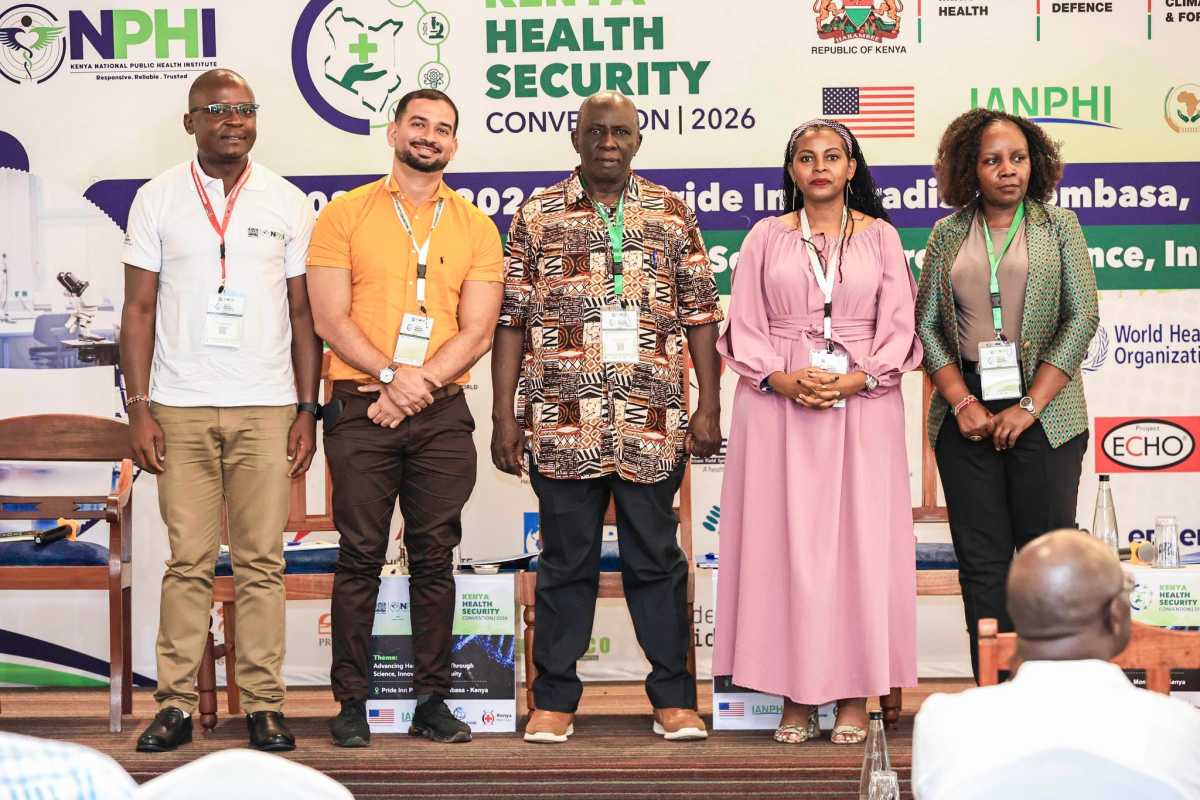
The inaugural Kenya Health Security Convention (#KeHSCon2026), held this May in Mombasa, brought together policymakers, researchers, and frontline responders to address a singular challenge: how do we build a resilient health system capable of withstanding the next global threat?
Representing the Centre for Health Solutions – Kenya (CHS), Dr. Nkirote demonstrated that for CHS, health security is about integrated, community-centered action and policy discussion and interventions.
Breaking Borders with the TIFA Project
 Health threats do not respect national boundaries. One of the key highlight from CHS at the convention was the success of the Tuberculosis Implementation Framework Agreement (TIFA) project.
Operating along the Kenya–Uganda border, the TIFA project pioneered a bilateral collaboration model. By working together with the National TB Programs of both countries, CHS ensured that TB patients moving across the border were not lost to follow-up.
- The Impact: Seamless cross-border tracking and linkage to treatment, ensuring that “health security” translates to “patient security” for those in transit.
The Vumbua Legacy: Integration is the Future
The convention also provided a platform to share the transformative results of the TB Reach Vumbua initiative. In Kiambu County, CHS proved that the “siloed” approach to healthcare is a thing of the past. Through Vumbua, we successfully integrated:
- Lung Health Screening
- Nutritional Support
- Mental Health Services
By partnering with health workers across both public and private facilities, the project demonstrated that a holistic approach, by treating the whole person rather than just a disease is the bedrock of a robust health system.

Key Convention Resolutions: A Roadmap to 2030
The convention concluded with a high-level commitment to the Mombasa Declaration on Health Security, outlining critical resolutions to safeguard the nation:
- Sustained Investment: Shifting from “crisis-mode” funding to permanent budget allocations for preparedness, ensuring systems are always active, not just reactive.
- The One Health Mandate: Formalizing coordination between human, animal, and environmental health sectors to detect zoonotic threats before they jump to human populations.
- Data Interoperability: A resolution to unify laboratory and surveillance networks across all 47 counties to enable real-time detection and immediate response alerts.
- Legislative Support: Parliamentary leaders committed to strengthening the legal frameworks for the Kenya National Public Health Institute (KNPHI), cementing its role as the nation’s scientific and technical anchor.
Moving Forward
By investing in community health promoters and cross-border partnerships, we are not only reacting to threats but building a healthier, more secure future for all.

