
Bringing Life-Saving TB Diagnostics Closer to Communities
Tuberculosis (TB) remains one of the world’s deadliest infectious diseases and continues to pose a significant public health challenge in Kenya. Despite major advances in prevention, diagnosis, and treatment, many people with TB are still diagnosed late or remain undetected, leading to continued transmission, poor health outcomes, and preventable deaths.
One of the key challenges in TB diagnosis is the reliance on sputum-based testing. Many individuals, particularly children, older adults, and people living with HIV, often struggle to produce adequate sputum samples for testing. This can result in missed opportunities for early diagnosis and treatment initiation.
To address these challenges, the Centre for Health Solutions – Kenya (CHS), in collaboration with national and county stakeholders, is implementing the Near Point-of-Care TB Diagnostics and Digital AI Stethoscope to Accelerate Case Confirmation, Equity, and Scale-Up (NPOC ACCESS) Project in Kiambu County.
NPOC ACCESS is both a project and a scientific implementation study designed to evaluate innovative TB diagnostic technologies that have the potential to transform how TB is detected and managed in Kenya and beyond.
What is NPOC ACCESS?
NPOC ACCESS is an innovative research and implementation initiative focused on evaluating new near point-of-care TB diagnostic solutions and digital health technologies. The project seeks to generate evidence on whether these technologies can improve the speed, accuracy, accessibility, and equity of TB diagnosis while reducing delays in treatment initiation.
The project is being implemented in Kiambu County across selected health facilities in Thika, Juja, Limuru, Lari, and Kabete sub-counties. It brings together county health leadership, healthcare workers, laboratory professionals, researchers, and community stakeholders to assess how these emerging technologies can be integrated into routine health services.
Why NPOC ACCESS Matters
Early diagnosis is one of the most important steps in ending TB. However, many individuals experience delays in diagnosis due to limited access to diagnostic services, transportation barriers, long turnaround times, and difficulties producing sputum samples.
NPOC ACCESS seeks to overcome these barriers by bringing advanced diagnostic technologies closer to patients and health facilities where care is first sought. By enabling faster testing and case confirmation, the project aims to reduce the time between screening, diagnosis, and treatment initiation.
The project aligns with Kenya’s commitment to finding the “missing” TB cases and supports global efforts to end TB through innovative, patient-centered approaches.
A Project and a Study: Understanding the Dual Purpose of NPOC ACCESS
Unlike many health interventions that focus solely on service delivery, NPOC ACCESS serves two complementary functions.
As a Project
NPOC ACCESS introduces innovative diagnostic technologies into real healthcare settings, strengthens local capacity through training, supports healthcare workers, and enhances access to diagnostic services in participating facilities.
The project focuses on improving patient experiences and reducing barriers that prevent timely TB diagnosis and treatment.
As a Study
NPOC ACCESS is also a structured scientific study designed to generate evidence on the effectiveness, feasibility, acceptability, and cost-effectiveness of new TB diagnostic approaches.
The study will evaluate how well these technologies perform compared to the current standard of care while examining their potential for scale-up within Kenya’s health system. Findings from the study will contribute to national and global discussions on improving TB diagnostic algorithms and expanding access to innovative diagnostic tools.
Innovative Technologies Being Evaluated
Near Point-of-Care TB Diagnostics
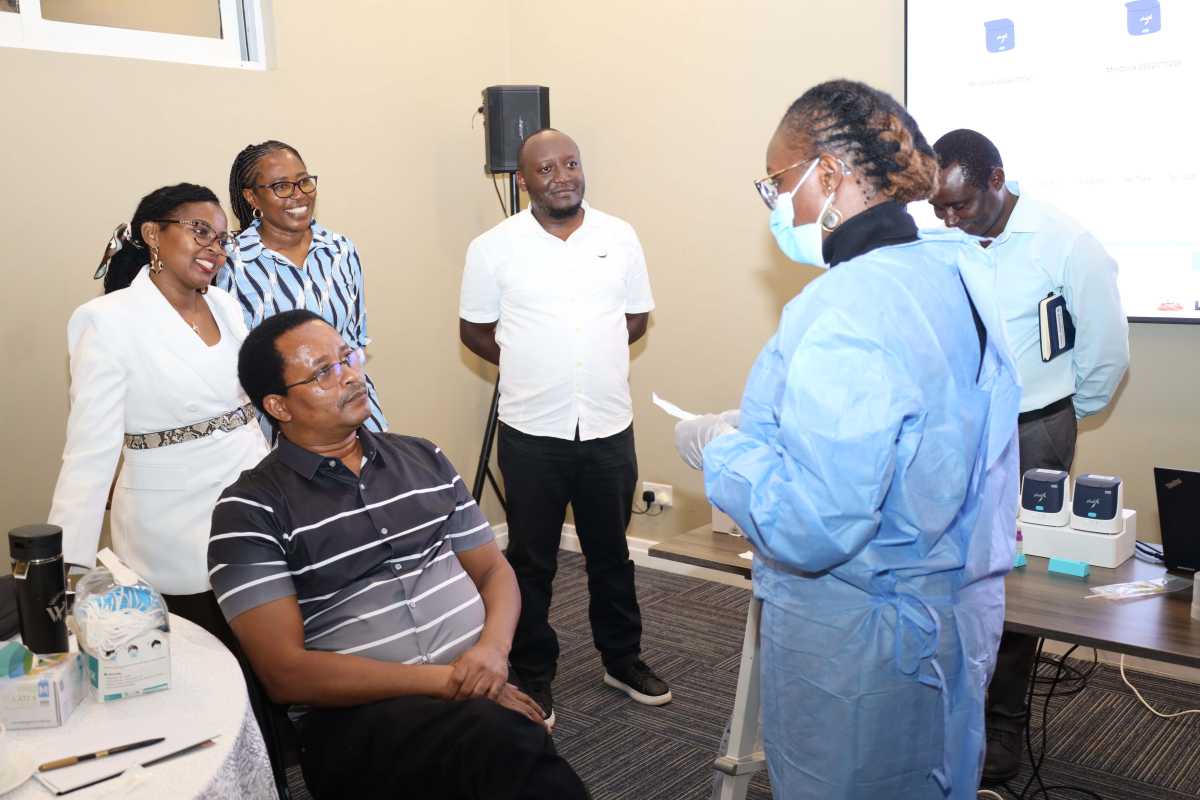
At the heart of the study is the evaluation of near point-of-care molecular diagnostic technology designed to detect tuberculosis closer to where patients receive care.
These technologies are intended to be simpler, faster, and easier to deploy than conventional laboratory-based systems. They require minimal infrastructure and can provide rapid results, making them particularly useful in resource-limited settings and peripheral health facilities. Emerging near point-of-care tests can also utilize alternative sample types, helping address challenges faced by patients who cannot produce sputum.
One of the technologies under evaluation is the MiniDock MTB assay, a portable diagnostic platform capable of rapidly detecting Mycobacterium tuberculosis. Such technologies have the potential to decentralize testing and expand access to timely diagnosis.
AI-Enabled Digital Stethoscope
The project is also evaluating an Artificial Intelligence (AI)-enabled digital stethoscope designed to support healthcare workers in identifying lung abnormalities that may be associated with TB.
The digital stethoscope captures and analyzes lung sounds using advanced algorithms, providing additional information that can assist clinical decision-making. By combining traditional clinical assessment with artificial intelligence, the technology has the potential to enhance screening and case detection, especially in settings with limited specialist support.
Expected Benefits of the Study
The NPOC ACCESS study seeks to answer several important questions:
- Can near point-of-care diagnostics accelerate TB case confirmation?
- Can AI-enabled tools improve screening and clinical assessment?
- Are these technologies acceptable to patients and healthcare workers?
- Can they be integrated effectively into routine healthcare workflows?
- Are they cost-effective and scalable within Kenya’s health system?
Answers to these questions will help policymakers, health program managers, and development partners make informed decisions about future investments in TB diagnostics and digital health innovations.
Strengthening Health Systems Through Evidence
NPOC ACCESS is not only about testing new technologies—it is also about generating evidence that can strengthen health systems.
The study will provide valuable insights into how innovative diagnostic tools can improve patient pathways, reduce diagnostic delays, and support same-day treatment initiation. The evidence generated may inform future national guidelines and contribute to broader efforts aimed at modernizing TB diagnosis and care in Kenya.
Partnership for Impact
Successful implementation of NPOC ACCESS depends on strong collaboration among national and county governments, healthcare workers, researchers, community representatives, and development partners.
Through these partnerships, the project is fostering a shared commitment to innovation, learning, and evidence-based decision-making. The involvement of healthcare workers and county leadership ensures that findings generated by the study will be relevant, practical, and responsive to real-world healthcare needs.
Looking Ahead
As Kenya continues its journey toward ending tuberculosis, innovation and evidence generation will play an increasingly important role in reaching underserved populations and closing diagnostic gaps.
NPOC ACCESS represents an important step toward a future where TB diagnosis is faster, more accessible, more equitable, and more patient-centered. By evaluating cutting-edge diagnostic technologies in real-world settings, the project is helping build the evidence needed to shape the next generation of TB care.
The lessons learned from NPOC ACCESS have the potential to influence TB diagnostic strategies not only in Kiambu County and Kenya but also across other high-burden settings globally.
Through innovation, research, and collaboration, NPOC ACCESS is helping bring the vision of ending TB closer to reality.

