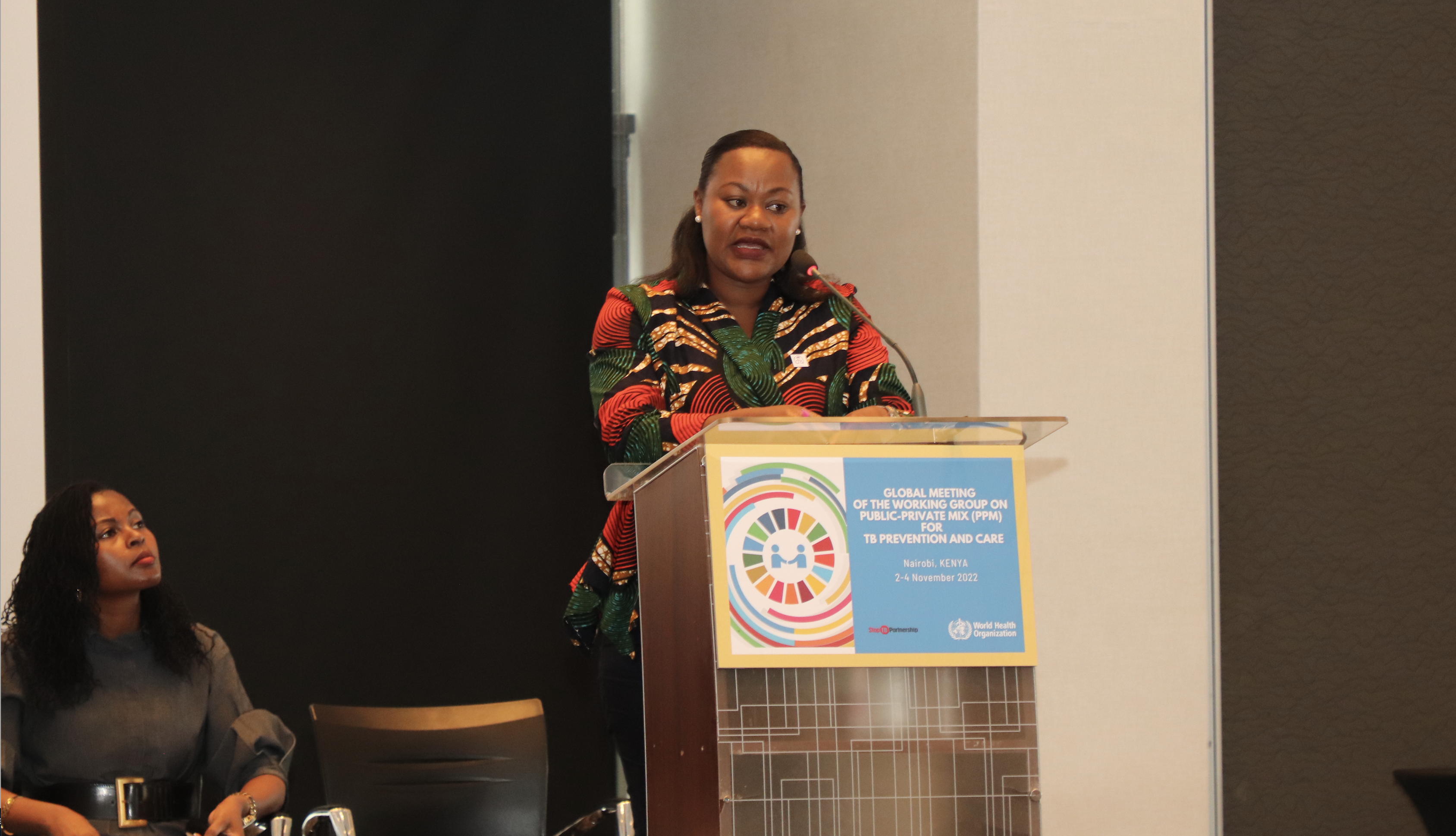
November 2 – 4, 2022: CHS joined over 120 National TB Program managers, policymakers, private sector, civil society, academia, field experts, international technical partners and development agencies in a two-day TB Global Working Group meeting on Public-Private Mix (PPM).
The meeting organized by the World Health Organization (WHO) Global Tuberculosis Program and the Stop TB Partnership was aimed at sharing experiences and discussing strategies to accelerate TB public-private sector engagement efforts.
Speaking during meeting, Dr Tereza Kasaeva, Director of WHO’s Global TB Programme noted, “The Global PPM Working Group Meeting, put the spotlight on the core issues around strengthening PPM monitoring to enhance accountability, integrating PPM into the broader universal health coverage agenda, enabling meaningful engagement of civil society in PPM efforts, and increasing advocacy for PPM prioritisation in the lead up to the 2023 UN High Level Meeting on TB.”
Delegates visited five health facilities in Nairobi among them; Rhodes Chest Clinic, Nyumbani Diagnostics, Mater, Coptic and St Mary’s Hospitals to experience and learn more about TB PPM initiatives and approaches used in the country to scale up PPM implementation.
With support from the United States Agency for International Development (USAID), CHS has been implementing TB PPM activities in the country for the last nine years through its Tuberculosis Accelerated Response and Care (TB ARC) and follow on Tuberculosis Accelerated Response and Care II (TB ARC II) activities.
To ensure systematic, effective and sustained engagement of the private sector in TB control at all levels, CHS has aligned its PPM implementation to the PPM models as outlined in the Kenya TB PPM Action Plan, and has provided support for various key activities, including:
- Identification, selection and engagement of private providers
- Strengthening PPM leadership and stewardship at the national and county level
- Linkage to diagnosis and care
- Technical assistance, mentorship and support supervision
- Capacity building of health workers
- Cross-learning and sharing of lessons learnt and best practices
- Use of digital technology for screening and notification of patients
- Increasing human resource to support PPM activities
)
&description=&image=https://chskenya.org/wp-content/uploads/2022/11/CHS-Participates-in-the-TB-Global-Working-Group-Meeting-on-Public-Private-Mix-PPM--1024x588.png)