June 2, 2015 marked the start of the 10th edition of the Annual HIV Prevention, Care and Treatment Consultative Forum organised by the Ministry of Health through the National AIDS and STI Control Programme (NASCOP). The three-day forum took place at the Ole Sereni Hotel in Nairobi and brought together members of the health fraternity, which included the Ministry of Health, health care workers, global and local partners, among others.
The aim of the consultative forum was two-fold:
- To provide an avenue for sharing and cross-learning of experiences, innovations and best practices
- To provide a platform for benchmarking among stakeholders in HIV prevention, care and treatment.
The fight against HIV/AIDS is one of the Millennium Development Goals (MDGs) that come to a close at the end of 2015. According to NASCOP, Kenya has made phenomenal achievements in the fight against HIV/AIDS. HIV incidence rates among adults aged 15-49 years declined from 0.62% in 2000 to 0.44% in 2013 while HIV transmission from mother to child declined from 44,000 in 2000 to 12,940 in 2013. These achievements are attributed to the implementation of a mix of behavioural, structural and biomedical interventions that are specific to the needs of different target populations.
Yet, even as the MDGs period draws to a close, the fight against HIV is far from over, and there is need for the government and implementing partners to think of the post-MDGs era as Kenya strives to achieve Vision 2030.
In 2013, UNAIDS launched the 90-90-90 targets that are fundamental to acceleration of HIV prevention, care and treatment. According to the targets, by the year 2020: 90% of all people living with HIV (PLHIV) will know their HIV status; 90% of all people diagnosed with HIV infection will receive sustained ART, and; 90% of all people receiving ART will have durable viral suppression. Discussions at the Consultative Forum were focused on the attainment of these targets.
Delivery of the consultative forum
The deliberations at the forum were managed through a collective sharing and cross-learning approach between the Ministry, donors and implementing partners present at the meeting. Best practices from various regions of the country were exhibited through both oral and poster presentations, with experts moderating these sessions and track workshops.
CHS Participation at the Forum
From inception of the Tegemeza project in 2011, CHS program staff and facilities have been at the forefront of innovating health solutions in Central Kenya.
With research, learning and innovation being core pillars of our work, CHS staff and staff from CHS-supported facilities shared their experiences and knowledge in a number of oral presentations at the conference. These included:
- Cecilia Muchemi – CHS Program Officer
- Dr Hellen Kalili – CHS Pharmacist
- Nelson Kamau – CHS-supported Peer Educator at the Nyeri County Referral Hospital (CRH)
- Hannah Njung’e – Olkalau sub County AIDS & STI Coordinator (cSASCO)
- Loice Nyawira – HIV Testing and Counselling (HTC) Provider at Nyeri CRH
- Linet Makena – Social Worker at Nyeri CRH
CHS Chief Executive Officer, Dr Paul Wekesa, featured in a panel discussion on ‘Improving Health Outcomes and Wellness among Adults Living with HIV.’ Fellow discussants on the panel included Prof. Sylvia Ojoo (Assistant Professor, University of Maryland), Noor Sheikh (Garissa CASCO) and Sebenzia Ulwenya (Vihiga CASCO).
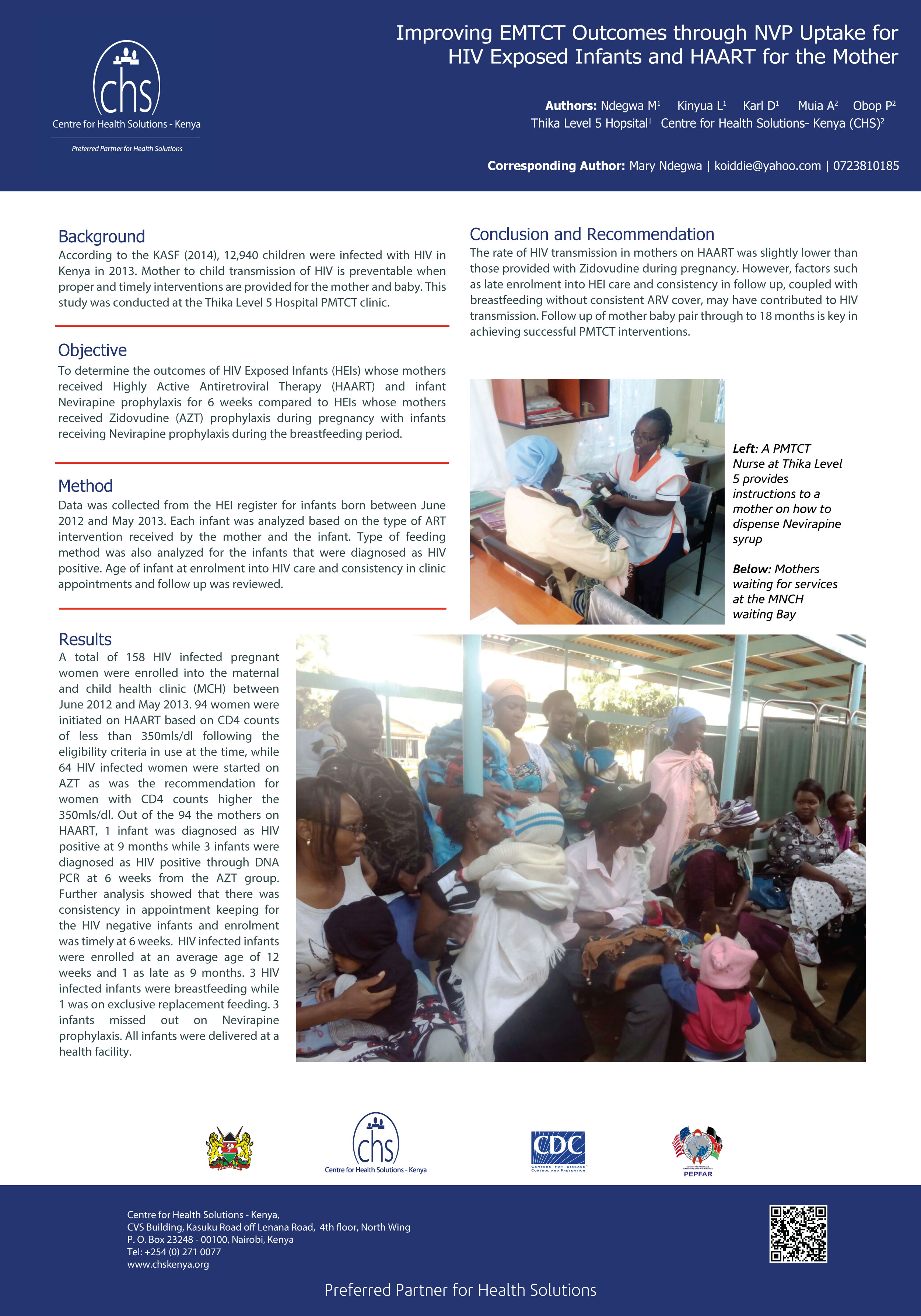
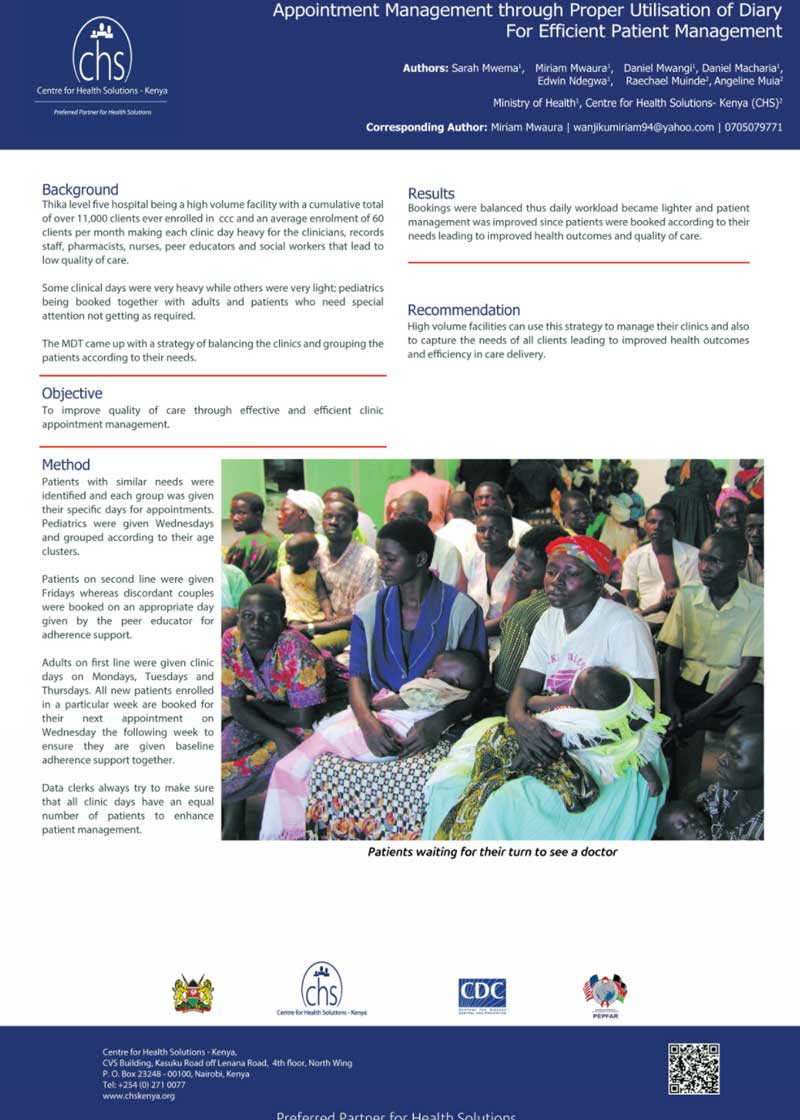
In addition to the oral presentations, CHS staff exhibited nine abstracts as poster presentations in different tracks, on:
- Improving EMTCT outcomes through NVP uptake in HIV Exposed Infants and HAART by the mother
- Improved defaulter tracking system
- Routine disclosure progress assessment of children transitioning to adolescent hood and follow up
- Effectiveness of alcohol cessation support on CCC clients Murang’a and Gatundu District
- Implementing viral load monitoring at Mukurwe-ini sub county hospital
- Appointment Management through proper utilisation of diary for Efficient Patient Management
- Improving PMTCT outcomes through integrated tracking system within the comprehensive care centre at Thika Level Five Hospital
- Empowering PLHIV’s Self-management and Positive Living through Task shifting and PLHIV’s Partnerships
- Men only support group as an effective adherence support strategy in male adult clients. A case study of Kirogo Health Facility