
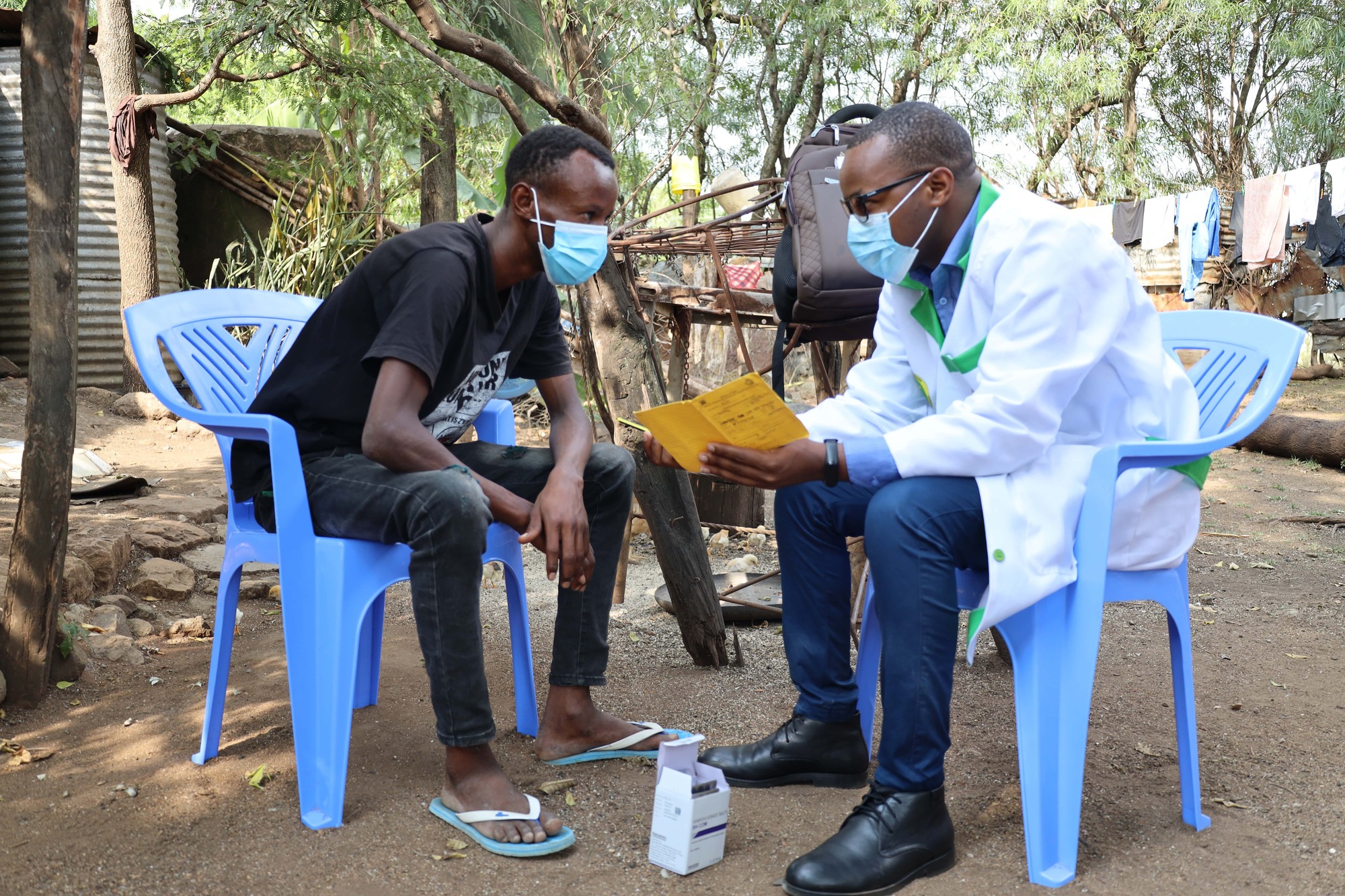
On a sunny Sunday afternoon, an upbeat 28 year-old Seth Kagia, TB clinician at Homabay County Referral Hospital, is packaging TB patients’ drugs for delivery to their homes.
“This has become a routine. Despite being a Sunday, I have to find time to take medicines to my patients as I check on their progress,” Seth tells us as we settle down for an interview.
In March 2020, after the first COVID-19 case was reported in Kenya, there was a disruption of health service delivery and the TB Clinic at Homabay County Referral Hospital was not spared. The number of clients visiting the clinic for treatment and clinic reviews decreased drastically.
“We experienced low case finding brought about by government restrictions on movement to contain the spread of COVID-19. Most patients also stayed at home limiting their hospital visits in fear of contracting the virus. The similarity between COVID-19 and TB symptom caused fear among community members. They avoided showing up for testing as they did not want to be mistaken for having COVID-19 and be quarantined,” Seth explains.
The situation was worsened by strikes and go-slows by health workers in the county due to lack of personal protective equipment.
“With lack of health workers in most facilities in the county, the small number of clients we had were unable to access services,’’ Seth sadly notes.
He adds, “The monthly Programmatic Management of Drug Resistant TB (PMDT) meetings were also halted due to COVID-19 restrictions on person-to-person meeting. This resulted in most patients on treatment not being monitored on their progress resulting in poor treatment outcomes.”
Another outcome of COVID-19 resulted in some TB clinics being converted to COVID-19 isolation centres, forcing most TB patients to be referred to other clinics in far flung areas. Due to social economic barriers most patients could not visit the facilities.
Noting the challenges faced by the patients, Seth took a personal initiative to ensure continuity of TB services amid COVID-19. He started delivering medicines to the patients who would not manage to come to the health facilities, something he does to date.
When other health workers went on strike, Seth remained at work to attend to patients visiting the clinic. With the support from USAID Tuberculosis Accelerated Response and Care II (TB ARC II), he participated in door-to-door screening in five hot spot areas in the county where 300 TB presumptive samples were collected.
To raise TB awareness and demand creation for TB services amid COVID-19, he participates in local radio talk shows to educate the community on TB prevention, diagnosis and treatment.
At the facility level, he has championed for the integration of TB and COVID 19 screening in all the departments. As patients are being screened for COVID-19, they are too screened for TB.
Seth has mentored his fellow health workers to improve TB services. Every two weeks, they review data to monitor gaps and come up with mitigation measures. For newly employed health workers, he mentors them with an aim of improving TB services. He is spreading his wings of mentorship to health workers in other counties through physical and virtual continuous medical education. So far he has trained over 10,000 health workers in 4 counties through support of USAID TB ARC II activity in collaboration with the National TB Program.
Daniel Okal, Homabay town sub-County TB coordinator applauds Seth for his exemplary dedication in ensuring continuity of TB services in spite of the challenges brought by COVID-19.
“I am proud of Seth for his immense contributions to this facility and ensuring that the health service provider-patient relationship is created, strengthened and maintained in offering patient care and supporting those around him to seek TB screening and treatment,” Okal shares.
John Mbota one of the patients whom Seth delivers medicine to at home had this to share, “If it were not for Seth, maybe I could be dead. I am afraid of going to the facility for the fear of contracting COVID-19 or being confused of having COVID-19 leading to isolation. He visits me every week to refill my medicines as well as monitor my treatment progress. I am now feeling better. The chest pain and coughing is gone. I hope to resume my work as a taxi driver soon.”

