
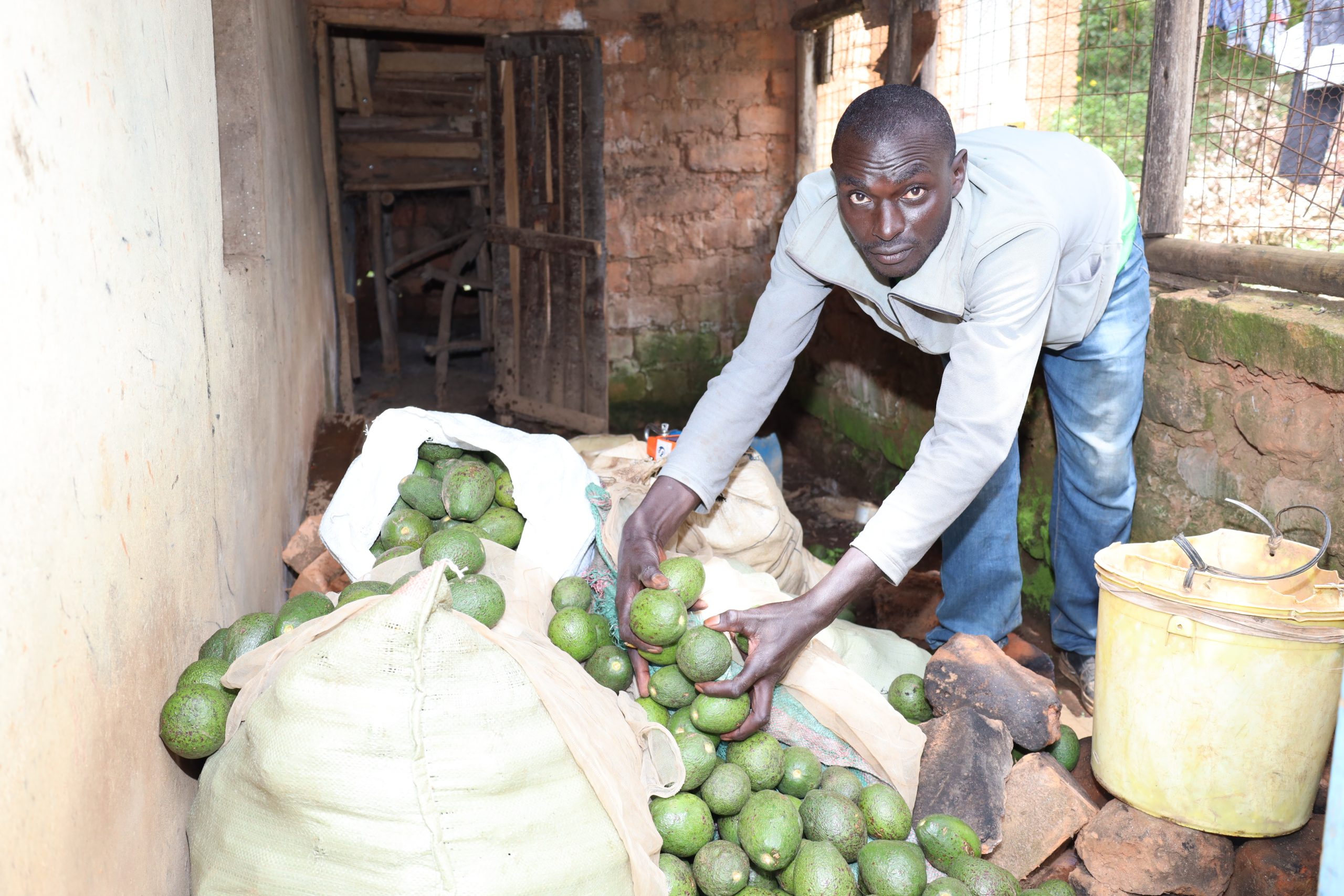
In July 2020, 32-year-old Joseph Munyao began falling ill. The pronounced symptoms of his illness were a cough, night sweats, and loss of appetite. He bought over-the-counter medicine and when the symptoms persisted, he visited the nearest private facility where he was treated for malaria.
“I thought my condition would improve after I started taking the malaria medicine but instead I deteriorated as days passed by. I became so weak and emaciated that I could barely recognise myself despite being on treatment, ” Munyao opens up.
Due to his deteriorating health, he stopped his business of buying and selling avocados and stayed at home. Often his wife would invite church members to come and pray for him but still, his condition kept on worsening.
“I could no longer stand up straight due to chest pain. I spent most of the time sleeping and when walking, it was in a bent position and for a short distance. As a result, some of my neighbors began saying that I was going to die,” Munyao vividly recalls.
One day in October 2020, acting on his instincts, Munyao dragged himself to his neighbor’s shop 20 meters from his house to watch the news on the national TV station.
“Since I became sick, I had lost interest in the `day-to-day happenings, but on this day, I felt the urge to go and watch the evening news. I felt tired before embarking on the journey to my neighbor’s shop but still pushed myself till I got there,” he says.
During the first commercial break of the news bulletin, an infomercial enlightening people on the signs and symptoms of tuberculosis aired. The infomercial also pointed out that if anyone is experiencing the signs and symptoms listed, they should seek treatment in the nearest health facility as TB is treatable and curable, and its treatment is free in all public health facilities in Kenya.
“I felt like the messaging in the infomercial was directed at me as I was experiencing most of the signs and symptoms highlighted. The message in the infomercial kept ringing in my mind as the rest of the bulletin went on that I had to leave before it ended with the resolve to visit the nearest health facility for TB screening,” Munyao says.
The following day in the company of his wife, he visited the nearest public health facility, where upon screening and sputum test, he was confirmed to have multi-drug resistant TB.
“Upon confirmation that I had TB, the health workers counselled me on the importance of adhering to treatment, what to do not to spread it to others, and the foods to take. I was then immediately initiated on treatment,” Munyao shares.
Munyao’s contacts, including his children, were screened for the disease, and none had the disease. The children were put on TB preventive therapy due to exposure to their father when he had the active disease.
The treatment of multi-drug resistant TB takes 18 months which he adhered to as guided. He is now fully recovered and back to providing for his family.
“I completed the 18 months of treatment and am now fully recovered. I feel healthy and energetic now. I have regained my weight from 24 to 58 kilograms thanks to the treatment I got. I am back to my business of buying and selling avocados to support my family, ” Munyao says.
He concludes, “ My request is for continuous messaging on Tuberculosis to educate people on the disease as many are suffering out there due to lack of knowledge on the disease. I was critically ill, had that message not gotten to me that evening through the television infomercial; maybe I would be dead by now. Let us keep on raising aware- ness on the disease.”
Munyao is among millions of Kenyans that Centre for Health Solutions – Kenya, USAID funded TB ARC II activity in collaboration with the Ministry of Health – National TB Program has reached through co-created and targeted TB campaigns disseminated through various platforms, including posters, radios, television, digital media platforms, and wall branding. The campaigns are aimed at raising TB awareness, demand creation for TB services, and treatment completion.

