
What is Chikungunya?
Chikungunya is a viral disease spread to humans by mosquitoes, similar to dengue and Zika viruses.
This viral disease was first described during an outbreak in southern Tanzania in 1952, where it derived its name from the Makonde language. ‘Chikungunya’ means ‘that which bends up’, which describes the stooped walking posture of sufferers with joint pain (arthralgia).
Signs and Symptoms
Chikungunya is characterised by an abrupt onset of fever, often accompanied by severe joint pain. The joint pain is often very incapacitating and unbearable, but usually lasts for a few days or may be prolonged to weeks.
Other common signs and symptoms include:
- muscle pain
- headache
- nausea
- fatigue
- rash
Most patients feel better within a week, but in others, the joint pain may persist for a longer period. However, death is rare due to Chikungunya.
Risk of Chikungunya
 An outbreak of Chikungunya has recently been reported in the North Eastern region of Kenya. Reports from the Ministry of Health indicate that 777 cases of the disease had been reported in Mandera between May and early June 2016, but there have been no associated deaths thus far. Chikungunya is not just a local issue, as it has been identified in over 60 countries in Asia, Africa, Europe and the Americas.
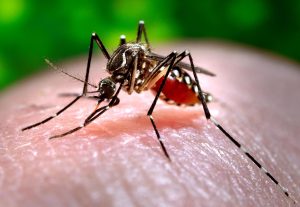
The virus is transmitted from human to human by the bites of infected Aedes female mosquitoes. Most commonly, the mosquitoes involved are Aedes aegypti and Aedes albopictus, two species which can also transmit other mosquito-borne viruses, including dengue. These mosquitoes can be found biting throughout daylight hours, though there may be peaks of activity in the early morning and late afternoon. Both species are found biting outdoors, but Ae. aegypti will also readily feed indoors.
After the bite of an infected mosquito, onset of illness occurs usually between four and eight days, but can range from two to 12 days.
Diagnosis
- The symptoms of chikungunya are similar to those of dengue and Zika diseases spread by the same mosquitoes that transmit chikungunya
- If you develop the symptoms above or suspect that you may be having chikungunya, visit your healthcare provider who will perform a proper diagnosis
- If you have recently travelled, tell your healthcare provider when and where you travelled.
- Your healthcare provider may order blood tests to look for chikungunya or other similar viruses like dengue and Zika
Prevention and Control
The closeness of mosquito breeding sites to the places where we live is a significant risk factor for contracting Chikungunya, as well as other mosquito-borne diseases. Prevention and control relies heavily on reducing the number of natural and artificial water-filled container habitats that support breeding of the mosquitoes. This may require the mobilisation of affected communities to remedy this.
During outbreaks, insecticides may be sprayed to kill flying mosquitoes, applied to surfaces in and around containers where the mosquitoes land, and used to treat water in containers to kill the immature larvae.
For protection during outbreaks of Chikungunya,
- Clothing which minimises skin exposure to the day-biting vectors is advised
- Repellents can also be applied to exposed skin or to clothing
- Insecticide-treated mosquito nets offer good protection for those who sleep during the daytime, particularly young children, or sick or older people
- Mosquito coils or other insecticide vaporisers may also be used to reduce indoor biting
Treatment
There is no specific vaccine or antiviral medication currently available to prevent or treat Chikungunya. Treatment is directed primarily at relieving the symptoms of the disease.
If you are diagnosed with Chikungunya,
- Get plenty of rest.
- Drink fluids to prevent dehydration.
- Take medicine such as acetaminophen or paracetamol to reduce fever and pain.
- If you are taking medicine for another medical condition, talk to your healthcare provider before taking additional medication.
- Prevent the spread of the illness by practicing the prevention and control measures listed above to protect others. Chikungunya virus can be found in the blood during the first week of infection, and can be passed on from one infected person to another through mosquito bites.
Sources:
- World Health Organization (WHO) | http://www.who.int/mediacentre/factsheets/fs327/en/
- Centers for Disease Control and Prevention (CDC) | https://www.cdc.gov/chikungunya/index.html
- Ministry of Health | www.health.go.ke